
Big Klaus and Little Klaus
Hans Christian Andersen
Audio in KazakhHow was the narration?
Thank you! This helps us make the narration better.
You listened to 30 seconds for free
Sign in to keep listening
Sign in with Google to listen to full fairy tales
Sign in with Google ★ Narrator voice — PremiumIn a village there lived two neighbours who were both called Klaus. One of them had four horses, and the other had only one horse. To tell them apart, people called the one with four horses Big Klaus, and the one with a single horse Little Klaus. Now let us tell what happened between them — it is a long story! By agreement, Little Klaus had to plough Big Klaus's field with his own horse for a whole week. It must be said that Big Klaus lent his four horses to Little Klaus only once a week, on Sundays. On that day Little Klaus looked at all the horses as if they were his very own, and he happily cracked his whip over their backs. The sky was clear and sunny, and towards noon the bells rang out, and smartly dressed people carrying their prayer books walked to church to hear the pastor's sermon. Everyone saw Little Klaus ploughing the land, delighted with life, with five horses harnessed to the plough. And whenever people came close, he would shout extra loudly:
"Gee up, my horses!" and swing his whip.
"You have no right to say that!" said Big Klaus, who had overheard.
"You have only one horse!" Little Klaus listened to this warning for a little while, but when more people came close, he forgot that he must not call the horses his own and shouted again, "Hey there, my fine horses!"
"Stop that right now!" said Big Klaus, losing patience.
"If you say that one more time, I'll hit your horse on the forehead. It will drop down dead!"
"I won't say it again!" said Little Klaus.
"You're right — there, I've stopped!" But how could he keep his word? When more people passed by and greeted him, he looked at the five horses with pride and,
"Gee up, my horses!" he shouted, cracking his whip.
"Well then, I'll rein in your horses for you and keep my promise!" said Big Klaus. And he took the thick stake used for tethering horses in the field, struck Little Klaus's horse on the head, and it dropped down dead.
"Oh no, what have you done! Now I haven't even got my one horse!" muttered Little Klaus, and he burst into tears. Then he skinned his horse, dried the hide well in the wind and put it in a sack. He slung the sack over his back and set off for the town to sell the hide. He had to walk a long way through a wide, thick forest, and on the way the weather turned bad and Little Klaus lost his way. By the time he managed to find the road again, it was completely dark. The town was still far away, and it was a long way back too. He could not get to either place before midnight. As he walked along, he saw a farmhouse by the side of the road. The window shutters were closed, but through a crack he could see a light glowing. "Well, I must find shelter here somehow," thought Little Klaus, and he knocked at the gate. The farmer's wife opened the gate, and when she heard what he wanted, she said that her husband was away, so she could not let him in without his permission, and asked him to go away.
"All right then, I'll sleep in the yard!" said Little Klaus. The farmer's wife slammed the door shut. Next to the house stood a tall haystack. Between the house and the haystack he saw a shed with a flat roof of reeds.
"I'll sleep here!" said Little Klaus when he saw the roof.
"What a lovely comfortable bed! As long as the storks don't fly down and peck my feet!" He said this because he had seen a big stork standing in its nest on the roof of the house. Little Klaus climbed onto the roof of the shed and rolled this way and that, stretching out his arms and legs to get comfortable. The shutters covered only the lower part of the window, so from here he could see the whole of the parlour. A grand table was laid in the parlour: everything you can think of was on it — wine, a roast, fish, the lot. Only the farmer's wife and the sexton were sitting at the table. The farmer's wife was pouring wine for her guest, and he was slowly eating the fish. "How could I join them?" thought Little Klaus, and he craned his neck to peer through the window. Goodness, what a huge pie he saw! Now that's what you call a feast! Just then he heard someone coming towards the house. It turned out to be the master of the house. He was a very kind man, but he had one strange habit he had had all his life: he could not stand church officials. As soon as he saw a church official,
he would fly into a rage and could not control himself. That was why the sexton had come to visit while the master was away, and why the kind woman was trying to treat him so well. When they realised the master had come back, they were terrified. The farmer's wife asked her guest to hide quickly in an empty chest. The sexton agreed — he too knew very well that the master lost control of himself when he saw a church official — and the farmer's wife hurriedly began hiding everything from the table in the oven: if her husband saw it, he would be sure to ask whom she had been entertaining.
"What a pity!" sighed Little Klaus, smacking his lips as he watched the food and wine being hastily hidden away.
"Who's there?" asked the farmer, noticing Little Klaus.
"What are you doing up there? Come on into our parlour instead!" said the master. Little Klaus explained that he had lost his way and asked if he could stay the night.
"Very well," said the farmer, "stay the night. But first the two of us must have a bite to eat and get our strength back." His wife greeted them both very warmly, laid the table and brought a big pot of porridge out of the oven. The farmer, who had grown very hungry on the road, began eating the porridge with a great appetite, but Little Klaus could think only of the tasty roast, fish and pie hidden in the oven. Under the table, by Little Klaus's feet, lay the sack with the horse's hide he was taking to sell. Little Klaus did not fancy the porridge, so he began rubbing the sack with his foot. When the dry hide gave a squeak,
"Shh!" said Little Klaus. Then he rubbed the hide again, and it squeaked even louder.
"What have you got in that sack?" asked the master.
"Oh, this? This is my wizard!" said Little Klaus.
"He says we don't need to eat this porridge. He has already worked his magic for us and hidden everything in the oven: there's a roast, fish and a pie."
"Well, I never!" cried the farmer. He ran to the oven, opened it and saw all the tasty food inside. We know that his wife had hidden the food there, but the master believed the wizard had conjured it all up by magic. Without a single word, his wife put everything on the table. And her husband and his guest happily tucked into the fish, the roast and the pie. While they were eating, Little Klaus pressed on the sack again and made it squeak.
"And what did he say now?" asked the farmer.
"He says he has also conjured up three bottles of wine for us, and they're in the oven too," replied Little Klaus. The farmer's wife had to bring the wine out of the oven as well. After drinking several glasses one after another, the farmer grew very merry. He would have liked nothing better than to get hold of Little Klaus's wizard. "Could we perhaps call up the Devil?" the farmer asked.
"That's what I'd like to see — it would be such fun."
"Perhaps," said Little Klaus. "My wizard does whatever I want. Isn't that so?" he asked the sack, rubbing it with his foot so that the hide squeaked. "Do you hear? He said 'yes'. Only the Devil is very ugly — there's really no need to see him!"
"Come on, I'm not the least bit afraid of him. What does he look like?"
"Well, he looks exactly like a sexton."
"Ugh!" said the farmer, spitting.
"How disgusting! I must tell you I can't bear the sight of a sexton! But never mind — I know it's the Devil, so it won't be so revolting! Besides, I feel rather brave now! Just don't let him come too close to me!"
"Then I'll tell my wizard so!" muttered Little Klaus, and he pressed on the sack and listened to it.
"Well, what does he say?" "He says you should go and open the chest standing in that corner: the Devil is hiding there. Only hold the lid, or he'll jump out and run away."
"Then help me hold it!" said the farmer, and he went over to the chest where the sexton was hiding. The sexton lay inside with his heart in his mouth. The farmer lifted the lid a little and peered into the chest. "Ugh! I saw him, I saw him!" he shouted, jumping back. "He looks just like our sexton. How disgusting!" To get over seeing such a nasty face, the two of them sat drinking wine all night.
"Sell me that wizard of yours!" the farmer pestered him.
"I'll give you as much as you ask — name any price you like!"
"No, I can't sell him!" said Little Klaus. "Just think how much he earns for me."
"Sell him! I'm dying to buy him!" the farmer begged Klaus.
"All right then," Little Klaus answered at last, "have it your way! You've been kind to me and let me stay the night, so I'll give you my wizard."
"Good!" said the farmer.
"But you must take the chest away; I don't want it in my house a moment longer. Who knows, the Devil may still be sitting in it." Little Klaus gave his sack to the farmer and got a big pile of money for it, along with a large cart to carry the money and the chest.
"Goodbye, and good health to you!" said Little Klaus, and off he went, pulling the cart with the bag of money and the chest in which the sexton was still sitting. At the edge of the forest flowed a big, deep river with a current so strong that it was hard to stand against it. A new bridge had been built across the river. Little Klaus stopped in the middle of the bridge and said loudly on purpose, so that the sexton in the chest could hear: "What do I want with this huge chest? It's as heavy as if it were full of stones! I've worn myself out with it. Instead of all this trouble, I'll throw it into the river: if it can float home, fine, and if it can't — who cares!" And with one hand he gave the chest a little push, as if he were about to throw it into the water.
"Wait!" said the sexton from inside the chest.
"Let me out first!"
"Oh!" cried Little Klaus, pretending to be frightened.
"He's still in there! Quick, I'll throw it into the water! Let it sink to the bottom!"
"No, no! I'm not the Devil, it's me!" shouted the sexton.
"Let me out, and I'll give you as much money as you want!"
"Well, that's a different matter!" said Little Klaus, and he opened the chest. The sexton leapt out and pushed the empty chest into the water. Then they went to the sexton's house, and Little Klaus got a big pile of money. Now his cart was full to the brim with money.
"My horse has done me a good turn after all!" Little Klaus said to himself when he got home and tipped the money out onto the floor.
"Won't Big Klaus be furious when he finds out how I got rich from my one horse! Rather than wait for him to find out, I'll tell him the whole truth myself!" So he sent a boy to Big Klaus to ask for the measure used for grain. "What could he want it for?" wondered Big Klaus, and he smeared a thin layer of tar on the bottom of the measure — let's see what sticks to it. It happened just as he had thought: when the measure came back, Big Klaus saw brand-new silver coins stuck to the bottom.
"Well, would you look at that!" said Big Klaus, his eyes popping out of his head in amazement, and he ran straight round to Little Klaus.
"Where did you get so much money?"
"Last night I sold the hide of my dead horse and made a profit."
"That's quite a profit!" Big Klaus barely managed to say, and he ran home, grabbed his axe, killed all four of his horses, skinned them and set off for the town to sell the hides.
"Hides for sale! Hides for sale! Who wants hides?" he shouted as he walked along the streets. When they heard him, all the shoemakers and tanners came up to find out how much he wanted. "A measure of money for each hide!" Big Klaus replied.
"Are you out of your mind?" the buyers protested. "Even if you put all our money together, it wouldn't fill a measure!"
"Hides for sale! Hides for sale! Who wants hides?" he shouted again, and to those who asked the price he said:
"A measure full of money."
"He's trying to make fools of us!" shouted the shoemakers and tanners, and grabbing their belts or their leather aprons, they began to give Big Klaus a good beating.
"'Buy my hides! Buy my hides!'" they jeered. "We'll show you hides! Get out of this town and don't come back!" And Big Klaus ran for his life. He had never had such a beating since the day he was born.
"Just you wait," he said when he got home,
"Little Klaus, you'll pay dearly for this! I'll kill him!" Meanwhile Little Klaus's old grandmother had died. In her life she had been a cantankerous old woman who did not get along even with her own children. She was bad-tempered and mean. Even so, Little Klaus felt sorry for her. Thinking that perhaps she might warm up and come back to life, he laid her in his own warm bed and tucked her in well. He himself sat down on a chair in the corner and dozed off. He had spent many nights like this before. In the night the door creaked open, and in came Big Klaus with an axe in his hand. He knew where Little Klaus's bed stood. He crept up and struck the person lying in the bed on the head with the axe. He thought it was Little Klaus — he did not know that the dead grandmother was lying there.
"There! Now you won't make a fool of me any more!" said Big Klaus, and he went home.
"Why, you villain!" said Little Klaus.
"He came to kill me! It's a good thing Grandmother was already dead, or she'd have been killed anyway!" Then he dressed his grandmother in her Sunday best, borrowed a horse from his neighbour, harnessed it to a cart, sat the old woman's body on the back seat so that she would not fall off as they drove, and set off through the forest. When the sun rose, they came to a big inn. Little Klaus pulled on the reins, stopped and went inside to ask what there was to eat. The innkeeper was a wealthy man and a kind one, but he had a fiery temper, as if he were stuffed with pepper and tobacco.
"Good morning!" he said to Little Klaus. "Why are you all dressed up before dawn?"
"Well, you see," replied Little Klaus, "I'm on my way to town with my grandmother. She's out there in the cart. I asked her to get down, but she won't. Would you take her a glass of mead? Only speak loudly to her — she's a bit hard of hearing!"
"Certainly!" agreed the innkeeper. He poured mead into a large glass and took it out to the old woman, who sat in the cart as stiff as a post.
"Here you are, your grandson has sent you a glass of mead!" said the innkeeper, coming up to the cart. But the old woman did not answer his question, nor did she even stir.
"Can you hear me?" bellowed the innkeeper at the top of his voice.
"Your grandson has sent you a glass of mead from me!" He shouted it again. And again. But the old woman did not move. At this, the innkeeper lost his temper and threw the glass of mead in the old woman's face. With the mead running down her face, the old woman toppled forward. Little Klaus had not tied the body down, only propped it against the back of the seat. At that moment Little Klaus flung open the door, ran up, grabbed the innkeeper by the collar and
"What have you done?" he wailed and lamented.
"You've killed my grandmother! Look for yourself — there's a dent in her forehead!"
"Oh, what a terrible misfortune!" groaned the innkeeper, wringing his hands. "It's all because of my hot temper. Little Klaus, my friend, I'll give you a whole measure of coins and bury your grandmother with honour as if she were my own mother — only don't tell anyone, for if they find out they'll cut off my head, and wouldn't that be dreadful!" And so Little Klaus got a whole measure of money, and the innkeeper buried his old grandmother with as much honour as if she had been his own. This time too Little Klaus came home with plenty of money. And again he sent a boy to Big Klaus to borrow the measure.
"How can this be?" wondered Big Klaus. "Didn't I kill him? I must go and see with my own eyes!" And he went round to Little Klaus again to find out what had happened.
"What a lot of money you have!" he said, his eyes bulging with amazement.
"You didn't kill me, you killed my grandmother," said
Little Klaus. "I sold her for money."
"You must have sold her for a fortune," said Big Klaus. Once he understood what had happened, he ran home and killed his own old grandmother with his axe. Then he put her in his cart and, hoping to make money, went to the town and went from chemist's shop to chemist's shop, asking them to buy the body.
"Where did you get her?" asked the chemist.
"She's my grandmother!" replied Big Klaus.
"I've brought her to sell for a whole measure of money."
"Good heavens, God save us!" cried the chemist.
"You don't know what you're saying. You'll be made to answer for this." And he explained to Big Klaus what a terrible crime this was and how he would be punished for it. When Big Klaus heard this, he was scared out of his wits. He dashed out of the chemist's, jumped into the cart, whipped up the horses and raced home. Neither the chemist nor anyone else stopped him, for they took him for a madman.
"You'll pay for this, Little Klaus!" Big Klaus shouted all the way home. As soon as he got home, he took a big sack, went to Little Klaus's house and said to him:
"So you've made a fool of me again? First I killed my horses, and now you've made me kill my grandmother! All of this is your fault. But you won't make a fool of me ever again!" He grabbed Little Klaus by the arm and stuffed him into the huge sack. He tied the sack shut, slung it over his back and
"Now I've got you! I'll drown you in the river!" he shouted furiously. The river was a long way off. It was not easy for Big Klaus to carry Little Klaus on his back. The road to the river went past the church. The sound of the organ came from the church, and the worshippers were singing beautifully together. Big Klaus put the sack with Little Klaus in it down by the side of the road and thought, "It would be good to pop into church and listen to a bit of the sermon before I go on." And so Big Klaus went off to the church. Little Klaus, left inside the sack, could not get free by himself, and everyone was in church.
"Oh, oh!" groaned Little Klaus, wriggling in the sack, but however hard he tried, he could not get out of the tightly tied sack. Just then an old herdsman, his hair completely white and his body bent with age, came hobbling along behind his herd with a crooked stick in his hand. The cows and bulls he was driving crowded round the sack with Little Klaus in it and began butting it. When Little Klaus heard a person's voice coming closer,
"Oh! Oh! I'm still so young. And yet I'm already on my way to Paradise!" he cried out from inside the sack.
"And I, poor wretch, with my old grey head, still can't get there!" said the herdsman, who had heard him.
"Then untie the sack," shouted Little Klaus.
"Lie in here in my place, and you'll get there alive straight away!"
"I'd be only too glad!" said the herdsman, untying the sack. Little Klaus sprang out of the sack to freedom.
"Now you will look after the herd!" said the old man, handing it over, and he climbed into the sack. Little Klaus tied the sack up tightly and drove the cattle away. A little later Big Klaus came out of the church, slung the sack lying where he had left it over his back, and as he carried it, he felt that it was much lighter than before.
Little Klaus had been at least twice as heavy as the old herdsman. "Well, look at that — it's got lighter! It must be thanks to the sermon I listened to!" thought Big Klaus. Carrying it like this, he reached the bank of the wide, deep river, threw in the sack with the herdsman inside and, thinking Little Klaus was in it,
"There! Now you'll never make a fool of me or trouble my head again!" he shouted. After that, on his way home, he met… Little Klaus, driving a herd of cattle!
"What's this — you've turned up in front of me again!" cried Big Klaus.
"Didn't I throw you into the water?"
"Of course you did!" said Little Klaus.
"Half an hour ago you threw me into the river!"
"Then where did you get such a big herd?" asked Big Klaus.
"Oh, this? This is an underwater herd!" replied Little Klaus.
"Let me tell you all about it. Thank you, of course, for throwing me into the water and making me rich! At first it was frightening in the sack! When you threw me into the cold water, the wind whistled in my ears! I sank straight to the bottom, but I didn't hurt myself on anything — such soft, comfy grass grows on the riverbed, and that's where I landed. When the sack came open, a maiden as lovely as the moon, in a snow-white dress, holding a wreath of green grasses, with her hair dripping wet, held out her hand to me and said, 'Is that you, Little Klaus? Here, take this herd, and a mile from here there's another herd grazing with even more cattle. Go — I give it all to you.' Down there I saw that the people who live underwater use the river as a road: they travel along it all the way to the bottom of the lake that this river flows into. How wonderful it is there! Such flowers, such fresh grass! And the fish swam past my ears, swishing by just like birds do up here. And what beautiful people I met! And what big herds graze near the town, along the ditches!"
"Then why did you come back from there so quickly?" asked Big Klaus.
"If it was so lovely there, you wouldn't be trying to tempt me with it!"
"I didn't do it for nothing!" said Little Klaus.
"Didn't you hear that the underwater maiden sent me to fetch another herd grazing just a mile from here? By 'road' she means the river — they don't know any other road — and since the river twists and winds, I'd have had to go a long way round. So I decided to go straight there over land, to where my herd is waiting. That way I save half a mile!"
"You lucky rascal!" said Big Klaus.
"Do you think that if I went down to the bottom of the river, I could get a herd too?"
"Of course!" said Little Klaus. "Only I can't carry you to the river in a sack — you're far too heavy. But if you really want to, walk there yourself and get into the sack, and I'll be only too happy to throw you into the water!"
"Thank you!" said Big Klaus.
"If I don't get a herd down there, I'll beat you black and blue, mind you!" he threatened Little Klaus.
"Now, now, don't be cross!" said Little Klaus. And so they came to the riverbank. When the thirsty herd saw the water, they rushed to drink.
"Look how they're hurrying!" said Little Klaus.
"See how they've missed the water: the bottom of the river is their home, after all!"
"Well then, help me, or I'll beat you black and blue!" said Big Klaus. He took a big sack that was tied to the back of one of the oxen and climbed into it.
"Put a stone in my sack, or I might not reach the bottom!" said Big Klaus.
"You'll reach it!" said Little Klaus, but all the same he put a big stone in the sack, tied it up tightly and threw it into the water. Splash! And so Big Klaus went straight to the bottom.
"Oh dear, I'm afraid he won't find any cows or oxen down there!" murmured Little Klaus, and he drove his herd home.

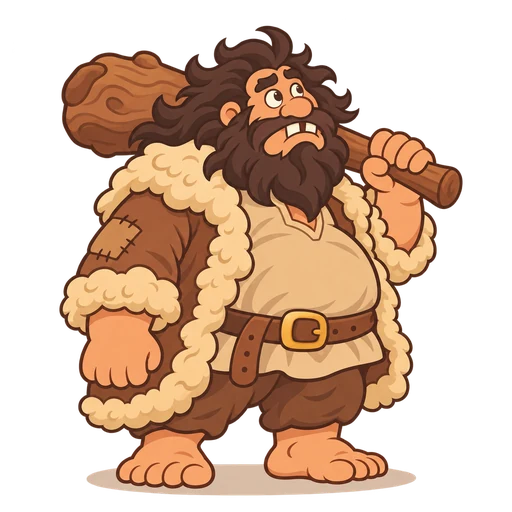
Heroes of this tale

Well done! The story is over!
You reached the end of the story. Great job!







Every day at 8:30 pm we'll send one bedtime tale. Just one notification a day.
On iPhone: tap Share → Add to Home Screen, open the site from that icon and turn it on here.
Done! Look out for a tale this evening 🌙
Something went wrong. Please try again later.
5 stories with your name and your picture. Show your parents!
For parents: a tale about your child for 390 ₸ — a trial week of Premium →Кімнің аты көп?
Share your opinion!
Hans Christian Andersen 5 433 people viewed

iPhone and Android app
All the tales, right on your phone
Read and listen at home or on the road. Free, with no ads.
- Audio tales keep playing with the screen off
- Pick up reading exactly where you stopped
- Find tales by age and by whether they have audio
- Night background and a comfortable text size

Sign in to keep reading
Today's free tales are over — 3 more are available tomorrow. Sign in with Google to continue — it is free and takes a second.
Sign in with GoogleHave an Android phone? In the app all tales are open without signing in.
Have an iPhone? In the app all tales are open without signing in.
Read in the app
Пікір қалдыру (0 пікір бар)
Әзірге пікір ешкім қалдырмаған!
Пікір қалдыру