The Ancestors of Greta the Poultry Woman
Hans Christian Andersen
Audio in KazakhHow was the narration?
Thank you! This helps us make the narration better.
You listened to 30 seconds for free
Sign in to keep listening
Sign in with Google to listen to full fairy tales
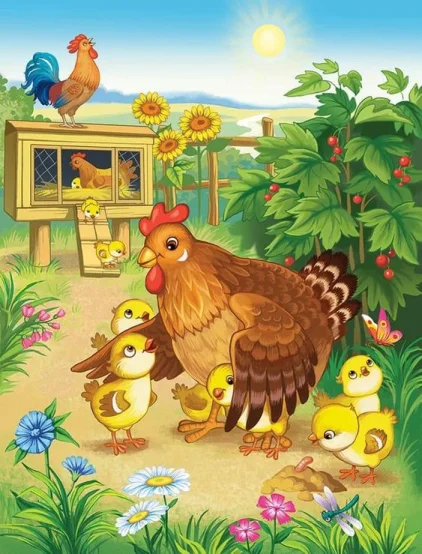
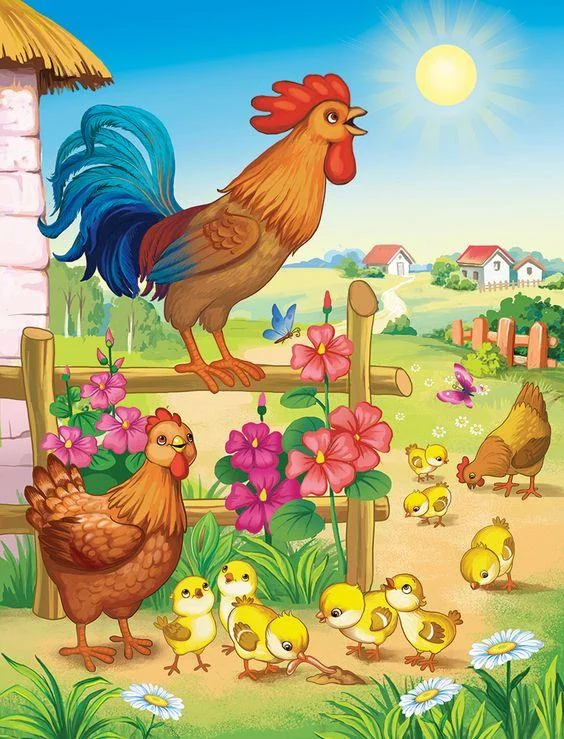
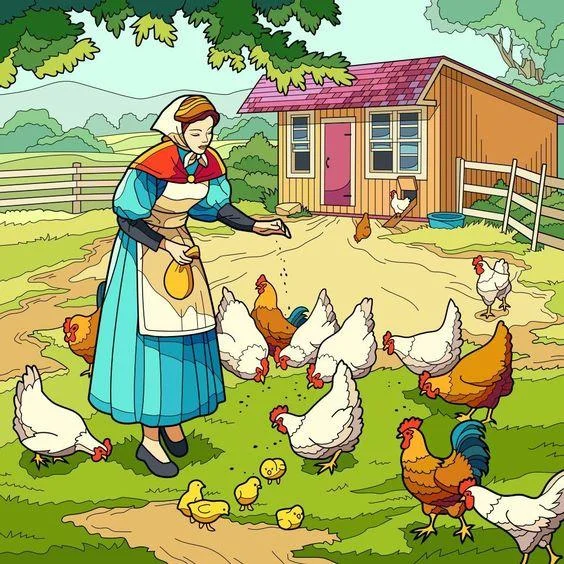
Sign in with Google ★ Narrator voice — PremiumIn a lovely new little house built for the ducks and hens in the manor yard, a poultry woman named Greta lived all on her own with the birds. This little house stood where the master's old house had once been — a house surrounded by a moat like a castle, with a drawbridge and a carved front topped with battlements. Right behind it lay a thick wood. Once upon a time a garden had stretched from here all the way to the lake, but now that place had turned into a squelching marsh. Above the huge trees that had grown there since time out of mind, flocks of crows, rooks and jackdaws circled noisily. However many of them were shot, there never seemed to be fewer — if anything, there were more. Their cries could be heard even inside the poultry house. And in the poultry house at that moment sat old Greta. Ducklings were climbing over her wooden clogs. Greta the poultry woman knew every hen and every duck here from the day it hatched out of its egg. She was proud of her hens and ducks and of the smart little house built for them. Her room was always spotlessly clean, because the lady who owned the poultry yard demanded it: she often brought her grand, important guests here to show them what she called her "hen and duck barracks".
In Greta's room there stood a wardrobe, an armchair and even a chest of drawers. On top of it lay a brightly polished copper plate. A single word was engraved on it: "Grubbe". This was the name of an old noble family that had lived in this manor long, long ago. The copper plate had been found when the ground here was being dug up. According to the sexton, apart from being an old thing, the copper plate was not worth a penny. The sexton knew all the secrets of this district like the back of his hand. He had read about them in books. Even now there were all sorts of papers covered in writing lying on his desk. The sexton was a very learned man. But even so, one old crow among those crows knew even more, and she announced everything she knew to the world, shouting it at the top of her voice in her own language. And because her own language was crow language, the sexton, for all his learning, could not understand it at all.
On calm summer evenings a thick mist would cover the whole marsh, so that it looked as if the lake water had risen high and swallowed even the dead trees where the crows, ravens and jackdaws roosted. It had been just the same in the years when Lord Grubbe lived here, and when the old house with its thick brick walls still stood. In those days the dogs were kept on very long chains, and sometimes as they ran they got right out through the gate. Between the tower and the master's house lay a paved courtyard. The windows of the house were narrow, with tiny panes no bigger than the palm of your hand. Even the windows of the great ballroom were like that. Although an old drum still lay in the hall, and everyone knows there is no music without one, no one could say exactly when there had last been a dance there in the time of the last of the Grubbe family. There was also a carved cupboard made by a master craftsman. In it were kept the bulbs of rare flowers. For Lady Grubbe loved gardening; she planted trees and grew all kinds of vegetables. Her husband, on the other hand, loved hunting and shooting wolves and wild boar. And he always took his little daughter Maria with him. At only five years old she sat firmly in the saddle and looked keenly around with her great black eyes. Although her father only told her to chase away the poor children who came running to stare at the gentry, she liked to take a whip in her own hand and set the dogs on them.
A peasant who lived in a hut next to the manor had a son named Søren, who was the same age as Maria. He had a wonderful talent for climbing trees. That was why Maria kept sending him up to fetch birds' nests. Once a rather large bird pecked him on the brow so hard that blood spurted out. People were terrified that it had pecked out his eye, but luckily all was well. Maria Grubbe called the boy "my Søren", and for a poor boy that was no small honour. One day this was a help to Søren's father, poor Jon, too. One day he did something wrong, and as a punishment he was made to sit astride the four-legged wooden horse that stood in the yard. Instead of a back, this horse had a single plank nailed on its edge. And so Jon was made to sit on this wooden horse. To make him suffer more, bricks were tied to his dangling feet. The peasant's face twisted with pain. When Søren saw this, he burst into tears and begged little Maria to stand up for his father. The girl at once ordered Jon to be set free. But when nobody listened to her, she stamped her feet in fury and tugged at her father's sleeve. She must have pulled very hard, because her father's sleeve tore. Maria never backed down in her life and always got her way. And so Jon was set free. At that moment Lady Grubbe came over to them, stroked her daughter's head and looked at her lovingly. But Maria could not understand why her mother had done that. She liked going to see the hunting dogs better than walking with her mother. So her mother went down to the garden alone. There on the lake bloomed white water lilies growing up from under the water, and reeds and white-winged flowers swayed on its surface. Lady Grubbe was enchanted by the delicate flowers.
"How wonderful!" she said. In the garden grew a tree that the lady had planted with her own hands, and which was rare in those days. It was called a copper beech, and it was a tree with reddish-brown leaves that stood out among the other trees. The copper beech looked like this only in the hot sun; in the shade it turned green like other trees and lost everything that made it special. Thousands of birds built their nests in the sky-high willows, the bushes and the tall grass. The birds seemed to know that the garden was safe and that no one would point a gun at them here. But then, out of nowhere, along came little Maria and Søren. And we know that he was good at climbing trees, that he raided birds' nests and carried off their eggs and their fluffy, yellow-beaked chicks that could not yet fly. The terrified birds, big and small, made a terrible din. The lapwing in the grass shrieked, while the crows, rooks and jackdaws perched on the tops of the tall trees screamed without stopping. Birds of this kind still scream like that to this very day.
"What are you doing, children?!" cried the gentle lady in horror. "Have you no fear of God?" Søren was embarrassed, and the fine young lady at first seemed to look down shyly, but then
"Father said we could!" she snapped.
"Away from here! Away!" shrieked the big black birds, and they vanished at once. But the very next day they came back. For this was their home. And the gentle lady, who would not hurt a fly, did not live long in her house. God took her to Himself. That place must have been more peaceful for her than this manor. As her body was carried to the church, the bells tolled mournfully, and the eyes of the poor filled with tears. For she had been so kind to the poor. After the lady died, there was no one to look after the garden she had planted, and the garden fell into ruin. People said that Lord Grubbe was a hard man, but his daughter, small as she was, knew how to make him change his mind. She knew how to make her father laugh and get him to do what she wanted. She was twelve years old; she had grown into a tall, strong girl who looked people straight in the eye with her jet-black eyes. She rode astride like a man and shot a gun like a sharpshooter. At that time some very grand guests came to this district — the foremost men of the land: the young king and his half-brother and inseparable friend, Ulrik Frederik Gyldenløve. They had come to hunt wild boar and to stay a day or two on Lord Grubbe's estate. At the table Gyldenløve sat beside Maria Grubbe. He took the girl's head in his arms and kissed her as if she were his little sister. But she slapped him on the mouth and said she hated him to death. Seeing this, everyone burst out laughing as if they had heard a good joke. Who knows whether the girl meant what she said, but five years later, when Maria turned seventeen, a messenger arrived with a letter. Lord Gyldenløve wished the noble young lady to become his bride.
"He is the most distinguished and remarkable man in the whole kingdom," said Lord Grubbe. "You have no business being choosy."
"I don't like him very much," replied Maria Grubbe. But she was not choosy and did not refuse the hand of the foremost man in the kingdom, the king's right hand. Her silverware, her woollen clothes and linen, the kitchen things, the bed and the chairs were sent to Copenhagen by sea rather than by land, while Maria herself travelled overland and arrived in ten days. Whether the wind was against them or there was no wind at all, the bride's belongings barely reached Copenhagen four months later. And by then Lady Gyldenløve had long since gone.
"I'd rather sleep on rough sacking than in his silk bed," she said. "I'd rather walk barefoot than ride around with him in a carriage!" November. When people were going to bed, two women arrived in the town of Aarhus. They were Maria Grubbe, wife of Lord Gyldenløve, and her maid. They had ridden on horseback from Vejle. And they had come there by ship from Copenhagen. They came to Lord Grubbe's manor, which was surrounded by a stone wall. The lord did not give his runaway daughter a warm welcome. Although he greeted his daughter with rough curses, he did give her a place to sleep. In the morning he gave her black bread and soup, but his talk at the table was no sweeter than the food. Her father's harsh temper was now turned against his daughter, and his daughter was not used to that. But Maria was not one to let things go either — for every word she had two. So she gave her father as good as she got! She spoke of her husband with such hatred and anger. She said that she herself was too honest and decent, and that was why she did not want to live with him any longer. A year went by like this, but that year brought no joy. There were times when father and daughter had bitter quarrels — and what then? This is the last word. Has an angry word ever led to anything good? Who knows how it will end!
"The two of us cannot live under one roof!" her father said at last. "Go to our old manor and keep your mouth shut there, or you'll be the talk of the town." And so they parted. With her maid, the daughter moved into the old house where she had been born and grown up, and from which her mother, the gentle lady, had gone to the other world. An old herdsman lived in this house. He was the only living soul there. The house was thick with dust and covered in cobwebs. The garden too was overgrown any old how. Hops and bindweed had wound themselves all round the trees and bushes. Goosefoot and nettles had spread everywhere. The copper beech was so overgrown with thick grass that its leaves had turned completely green, and it looked no different from any ordinary tree. And so it too had lost all its beauty! Over the giant willows flew crows, jackdaws and rooks beyond counting, a great black cloud of them. They cawed and squawked so much that they seemed to be telling each other big news. "The girl who had our nests destroyed and our eggs and chicks stolen has come back! And the thief who fetched everything for her now climbs a bare, dead tree. He climbs right to the top of the tower, and if he doesn't do things properly, he gets what he deserves!" they seemed to be saying. In our own day the sexton found out this story. He read it in old books and manuscripts that had been completely forgotten. Along with other legends, the story of Maria Grubbe was kept on his desk. "Fate lifts you up one moment and throws you down the next," he says. "When you hear a story like this, you can only marvel!" So let us too hear what became of Maria Grubbe. But we had better not forget Greta the poultry woman either, who now sits in her lovely poultry house on the very spot where, in days gone by, Maria Grubbe sat in her manor. Only Maria's nature was completely different from that of Greta the poultry woman. Winter passed, spring and summer passed too, and a cold autumn came, wrapped in a raw, chilly sea mist. Life in this manor was lonely and dreary. One day Maria Grubbe took a gun and set off for a clearing overgrown with juniper. She shot hares and foxes, and every bird that caught her eye. Here she met many times a well-known nobleman, Palle Dyre of the Nørrebæk estate. He too must have been out with his dogs, shooting. Whenever the huge Palle Dyre got talking with Maria, he would boast about his heroic deeds. He had once tested his strength against the late Lord Brockenhuus, master of the Egeskov estate. Legends about the courage of that man, who had lived on the island of Funen, are still told today. Following his example, Palle Dyre too had a hunting horn hung on a chain at his gate. As he rode into his estate, he would grab the chain, pull himself up, horse and all, and sound the horn.
"Come and see for yourself, Lady Maria — the air is clean at Nørrebæk too," he used to say. When Maria came to his estate, there was no inscription anywhere. But later, on the candlesticks of Nørrebæk church, one could read that they had been given by Palle Dyre and Maria Grubbe of the Nørrebæk estate. Palle Dyre was very strong, and he soaked up strong drink like a sponge; like a bottomless barrel, he never once said he had had enough. When he snored, he made as much racket as a whole herd of pigs, and his face was always red, flushed and sweaty.
"A hog of a man, shameless, and as lazy as a tomcat," the daughter of Lord Grubbe, Lady Palle Dyre, used to say of her husband. Living with Palle soon bored her. For it did not make their life any better. One day the table laid at the manor stood untouched. Palle Dyre had gone fox hunting, and however hard they searched, they could not find the lady. Palle Dyre came back only at midnight. But Lady Dyre did not come back that night, or even the next day. She had left the Nørrebæk estate for good, and without saying goodbye. A cold wind blew that chilled you to the bone, and the weather was damp and unpleasant. A flock of black crows circled, cawing, right above Maria's head. Even those birds were not left homeless out in the fields like Maria. Maria at once set off south, and on the way she stopped in Germany and sold several rings set with precious stones.
Then she travelled east, and after that she turned west. She lived without any meaning or purpose and was at war with every living thing, even with God Himself. Her heart grew heavy, and she sank into a pitiful, feeble state. Before long her body grew weak too, and the poor woman could barely drag her feet. As Maria fell to the ground, she nearly crushed a lapwing, which fluttered up and flew away. "Pee-wit, pee-wit! Oh, you wretched thief!" cried the lapwing. That is how lapwings always cry. Maria had never in her life known what it was to take other people's belongings. But now she remembered how, as a little girl, she had had birds' eggs and chicks taken from their nests and their nests destroyed. From where Maria lay, she could clearly see the hills by the shore, where the fishermen lived. But Maria was so weak that she could not get to them. Big white gulls that flew along the shore circled over her, squawking just like the crows, rooks and jackdaws over the garden at her home. The birds flew down very close to her. The white gulls now looked pitch-black to her; everything went dark before her eyes, as if night had fallen. When she came to, she felt that someone was carrying her. She was in the arms of a tall, strong, very young man. She looked at his bearded face: there was a scar on his brow. It split his eyebrow in two. He carried the unfortunate woman to a small ship, and for his kindness he got a scolding from the skipper. The next day the small ship raised its sails and put out to sea. Since Maria Grubbe did not come back ashore, she must have sailed away too. But didn't she come back? Come back she did — the question is only when, and where. The sexton would know for sure.
He did not make up this remarkable story himself; he read it, and convinced himself it was true, in an old book that you and we can read too. It brought to life, as clearly as if they were living people before our eyes, the century in which it was written and the people of that time. The Danish writer Ludvig Holberg, who wrote so many wonderful books and side-splitting comedies, told in his letters about Maria Grubbe where, and on which path of life, fate had brought him together with her. This story is well worth listening to. And as we listen, let us not forget Greta the poultry woman either, who sits in her poultry house as cheerful and content with everything as ever. And so the small ship raised its sails and sailed off into the open sea. Let Maria Grubbe sail away with it. And let us break off our story here for a while. Many, many years went by. Then came the year 1711. The plague had struck Copenhagen. The Danish queen fled to her homeland, Germany, and the king too abandoned his capital. In short, everyone who could fled the city. Even the students wanted to flee Copenhagen. At last the very last student, who had stayed behind longer than everyone else at the so-called Borch's College near Regensen, set off to flee as well. Carrying a knapsack stuffed more with books and notes than with clothes, he went out into the street at two o'clock in the morning.
A raw, cold fog hung over the city. There was not a living soul around. Crosses had been drawn on all the gates and courtyards. That meant the houses either had the plague or everyone in them had died. Even the wide, winding street of Købmagergade stood empty. That was what they called the street leading from the Round Tower to the king's palace in those days. Big carts loaded with the dead rolled right along it. Every time the driver cracked his whip, the horses broke into a gallop. The young student held a brass box with a sponge soaked in spirit up to his nose and breathed in the sharp smell for a long time. From a cellar under a house in one of the side streets came the sound of townspeople singing loudly and laughing wildly. These people spent the night without rest, trying not to think that the plague was lying in wait for them, and that in the blink of an eye it would throw you too onto that cart for the dead along with all the others. The student headed for the harbour by the Palace Bridge. Several small ships were moored there. One of them was weighing anchor to get away from the plague-stricken city as fast as possible.
"If God helps us and we stay alive, and the wind is with us, we'll reach Falster by Grønsund," said the skipper, and he asked the name of the student who had decided to set off with him.
"Ludvig Holberg!" said the student. At that time this name was no different from anyone else's, but now it is one of the most famous names in Denmark. In those days Holberg was a very young student whom nobody knew. When the small ship passed the palace and came out into the open sea, dawn had not yet even begun to break. A light breeze rose and filled the sails. The young student sat with his face to the wind and dozed off, though it would have been better if he hadn't. On the morning of the third day the small ship reached Falster and dropped anchor.
"Do you know of a house where they let rooms cheaply?" Holberg asked the sailor.
"I suppose you'd best go and see the ferrywoman at the Borrehus crossing," the skipper replied. "To get on her good side, it's best to call her Mother Søren Sørensen Møller. But be careful, mind, or she'll easily flare up. Her husband was locked up for some wicked deed, and she runs the ferry herself — she has enormous hands." The student slung his knapsack over his back and went off to find the ferrywoman. The door was not latched and opened easily, and he went into a room with a stone floor. The first thing he noticed was a wide bench bed with a big cover made of animal skins lying on it. A white broody hen, tied by its foot to the bench, knocked over a bowl of water, and the water flooded the floor. Apart from a baby lying in a hanging cradle, there was no one in this room or in the next one. But as soon as the ferry came into view, the person sitting on it could be seen too. They were so tightly wrapped from head to toe in a wide hooded cloak that it was hard even to tell whether it was a woman or a man. The ferry reached the shore and stopped. Straight away a tall, handsome woman, still not past her beauty, came into the room. Her black eyes under black brows looked proud. This was the woman called Mother Søren the ferrywoman. But birds such as jackdaws and rooks, if they saw her, would have called her by a different name — one we know quite well. Although she looked gloomy and spoke little, she gave the student her consent. She let him take shelter in this house until the plague in Copenhagen died down. All sorts of people came to the ferrywoman's lodge every day from the little town nearby. Sivert the customs officer used to come with Franz the Cutler. They would drink a mug of beer each here and chat with the young student. He was a quick-witted man. According to them, he knew his business, could read Greek and Latin, and understood every branch of learning.
"The less you know, the easier and simpler life is," Mother Søren remarked once.
"It's hard for you, isn't it!" Holberg said another time, seeing her washing clothes and chopping wood herself.
"I know what I'm doing, whatever I do!" said the woman.
"So have you worked yourself to the bone like this since you were a little girl?"
"Can't you tell from my hands?" she said, showing her small, strong hands. It was true: the nails on her fingers were worn down, and her hands were beginning to lose their beauty. "If you're so clever, tell from my hands. After all, you can see into people's hearts!" Before the New Year a blizzard blew up and the frost grew harder. The wind raged too, as if it wanted to fling His Majesty's vodka in everyone's face. But even this did not frighten Mother Søren: she wrapped her cloak tightly round her, pulled her hood down low and sat as if nothing were wrong. By midday the lodge was already gloomy and dark. She threw brushwood and peat on the fire and set about darning her stockings. For there was not a single shoemaker on this island. Towards evening, unlike before, she became quite talkative and began to speak of her husband.
"He killed a skipper from Dragør by accident and was sentenced to three years of hard labour in chains at Holmen. He was just an ordinary sailor, so there was no one to stand up for him. And so it all ended according to the law, just as the law requires."
"The law is the same for everyone, for the nobility too," Holberg objected.
"That's what you think!" said Mother Søren, and she fell silent, staring into the fire. A little later she took up the conversation again herself. "And what do you know about a certain Lykke? Have you heard how he ordered one of his churches to be pulled down? Then listen. For doing that, Pastor Made told him exactly what he thought of him from the pulpit. And straight away Lykke had the pastor put in chains, brought him to trial and, by his own command, had him sentenced to have his head cut off. And so Master Made's head was cut off then and there. You can't call that killing by accident. That's an outrage. And this same Lykke is still living as free as a bird."
"You can't compare those times with today," said Holberg. "Things are different now."
"Tell fairy tales like that to fools!" said Mother Søren. She got up and went into the next room, where her baby lay — a girl, as she said. The woman of the house tidied the room and settled her baby properly. She made up a bed for the student on the bench and gave him the blanket. Although Holberg had been born and raised in Norway, he felt the cold more than the woman did. The first day of the New Year was sunny and bright. The frost was so hard that the fallen snow had frozen solid and stiff. You could walk across it as if it were ice. Around noon the town bells began to ring. The student Holberg wrapped himself in his clumsy woollen cloak and got ready to go into town. Above the Borrehus crossing, jackdaws and rooks circled with a great din. Their noise even drowned out the bells. Mother Søren came out of the house and filled her copper pot with snow. Later she would melt it to make drinking water. Then she noticed the birds circling right above her head, remembered something and stood lost in thought. The student Holberg set off for the church. The road went past the house of Sivert the customs officer, near the town gate. On his way back he was invited in for a hot drink of ale with ginger and treacle. There the talk turned to Mother Søren. The customs officer knew nothing much about her, and there were not many who knew more. All he knew was that she was not from these parts — not from Falster. You could tell that she had once lived in comfort. Her husband was an ordinary sailor, a hot-headed one it seemed, who had shot a skipper from Dragør.
"He beats his wife too, often enough. And yet she keeps defending him."
"I'd never put up with that," said the customs officer's wife. "I'm not just anybody either! My father was the king's stocking-maker."
"And you, for your part, are the wife of a royal official," Holberg replied, politely sidestepping. And so Twelfth Night came. This evening is celebrated in memory of the three kings of the East who came to worship the baby Jesus. Mother Søren set a "three kings' candle" in front of Holberg and lit it. That is to say, she set out three candle stubs cast from tallow.
"Have you lit one candle for each of your husbands?" asked Holberg.
"For each of my husbands, you say?" the woman asked again, staring at him without taking her eyes off him.
"Yes — for each of the three wise men of the East?!" Holberg explained.
"Ah, I see!" said the woman, and she was silent for a long time. But on that festive evening the student learned many of her secrets.
"Do you really love your husband?" Holberg asked Mother Søren. "People say he ill-treats you every day."
"What business is it of people's!" she said. "If I'd been beaten like that as a child, perhaps it might have done me good; but now I suppose it's my punishment for my sins! And I alone know how much good he has done me," and she straightened up. "When I lay sick and helpless in the bare open country with no shelter at all, who looked after me, apart from the crows and ravens circling over me?! As I lay there like that, it was he who took me up in his arms and carried me to his little ship. For that find of his, he got rough treatment and curses from his master. I'm not as weak as all that — I recovered. Everyone has their own ways, and so does Søren. You don't judge a worn-out horse by its bridle. My life with him has meant far more to me than my life with those who were called the most courteous and most famous of all the king's subjects. For I was married to Gyldenløve, cousin and heir of the king's mother. After that I married Palle Dyre. Each of them had his own peculiarities — everyone is different, and so am I! Perhaps I've talked too much, but now you've heard it all." With that, she left the room. This was Maria Grubbe. She suffered many hardships of fate. She did not live to see many more Twelfth Night festivals. According to Holberg's writings, she died in June 1716. But he did not write that, while Mother Søren lay in her coffin, flocks of huge black birds circled right above the Borrehus crossing — though how could he have known? They flew in silence, as if they understood that the funeral rites called for quiet. As soon as Mother Søren's body was laid in the ground, they disappeared. But that same evening, above the old manor in Jutland, there were crows, rooks and jackdaws beyond counting. They were all squawking at once. Perhaps they wanted to tell of the peasant's son who had raided their nests and taken their eggs and their unfledged, fluffy chicks, and who was now languishing in chains on the king's island of Holmen; or perhaps they wanted to tell of the noble lady who had ended her days as a ferrywoman by Grønsund — at any rate, they all seemed in a hurry to spread some great news.
"Caw, caw! Wonderful! Wonderful!" they squawked. And when the old castle was pulled down, their descendants squawked in just the same way:
"Caw, caw! Wonderful! Wonderful!" they squawked. And to this day they have not stopped. Only now they have nothing else to say," said the sexton, ending this story. The Grubbe family died out, and their home was pulled down. In its place now stands a lovely poultry house with a gilded weathervane on its roof. In it sits old Greta the poultry woman. However long she looks at her beautiful home, she can never look enough! If she had not come here, she would have spent her life in the poorhouse. Above her the pigeons coo, and around her the turkeys gobble and the ducks quack.
"Nobody knows who she is!" say the birds. "She has no family. They only keep her here out of pity. She has no father and no mother, and she doesn't raise chicks like we do." And yet Greta did have relatives. Only Greta herself did not know it. The sexton did not know it either, even though he collected papers with all sorts of writings. But one old crow knew Greta's ancestors, and she told the others about them. She must have heard from her own mother and grandmother who Greta the poultry woman's mother and grandmother had been. We have not forgotten either — you and we both remember how her grandmother, as a little girl, galloped across the bridge on horseback and looked down her nose at everything around, as if she alone were mistress of every bird's nest and the whole world. We saw her in the juniper clearing near the hills by the shore, and then at the Borrehus crossing. Her granddaughter, the last of that family line, came back home, to the place where the old manor had stood long ago and where the wild black birds squawked. But she sat among the tame farmyard birds. She knows these birds, and the birds know her. Greta the poultry woman had nothing left to wait for in life; she had lived her life, and if she died now she would have no regrets. "Caw, caw!" cried the crows. One day Greta the poultry woman too will be laid in a coffin and buried in a grave. And where she is buried, perhaps only that old crow will know, if she is still alive. And so we too have learned the story of the old manor, of the old noble family, and of all the ancestors of Greta the poultry woman.
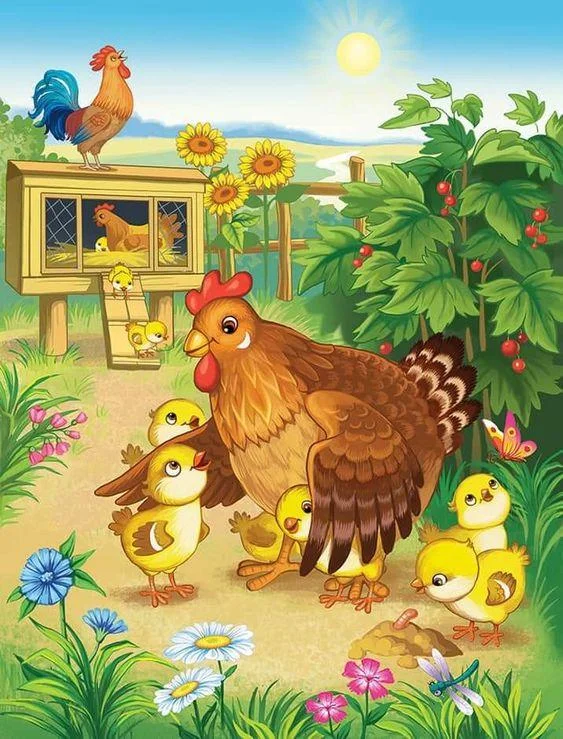
Heroes of this tale




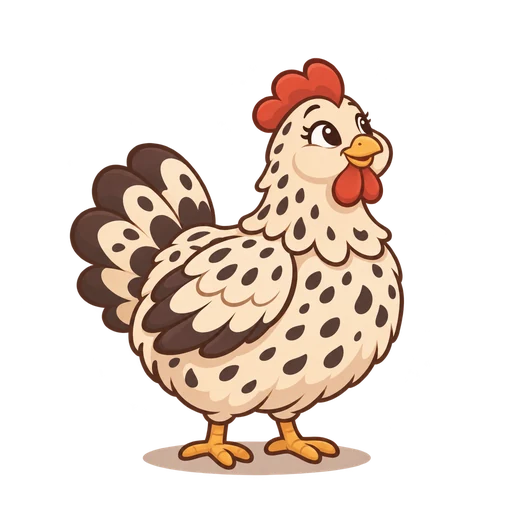

Well done! The story is over!
You reached the end of the story. Great job!









Every day at 8:30 pm we'll send one bedtime tale. Just one notification a day.
On iPhone: tap Share → Add to Home Screen, open the site from that icon and turn it on here.
Done! Look out for a tale this evening 🌙
Something went wrong. Please try again later.
5 stories with your name and your picture. Show your parents!
For parents: a tale about your child for 390 ₸ — a trial week of Premium →Гретаның үйшік салуының себебі неде?
Share your opinion!
Hans Christian Andersen 4 379 people viewed

iPhone and Android app
All the tales, right on your phone
Read and listen at home or on the road. Free, with no ads.
- Audio tales keep playing with the screen off
- Pick up reading exactly where you stopped
- Find tales by age and by whether they have audio
- Night background and a comfortable text size

Sign in to keep reading
Today's free tales are over — 3 more are available tomorrow. Sign in with Google to continue — it is free and takes a second.
Sign in with GoogleHave an Android phone? In the app all tales are open without signing in.
Have an iPhone? In the app all tales are open without signing in.
Read in the app
Пікір қалдыру (0 пікір бар)
Әзірге пікір ешкім қалдырмаған!
Пікір қалдыру