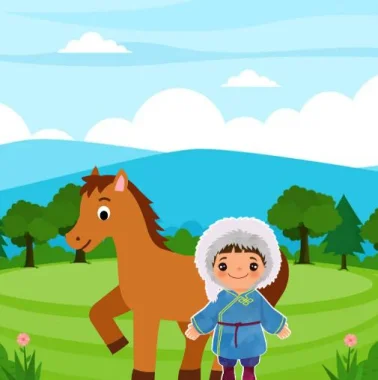
Kendebai and His Horse Kerkula
Kazakh folk tales
Audio in KazakhHow was the narration?
Thank you! This helps us make the narration better.
You listened to 30 seconds for free
Sign in to keep listening
Sign in with Google to listen to full fairy tales
Sign in with Google ★ Narrator voice — PremiumLong, long ago, in the olden days, when the goat's tail was short, in a valley of the Karatau mountains, on the banks of the Karasu river, there lived a poor man named Kazankap. Kazankap shot birds, and his wife wove nets and patched clothes, and that is how they got by. One day Kazankap's wife found she was expecting a child. After nine months and nine days, she gave birth. A son was born, with a head as sturdy as a leather flask. They were overjoyed and named their son Kendebai. Kendebai grew not by the month but by the day: on the sixth day he laughed, on the sixtieth day he walked, and by the age of six he was a young man. He was very strong: anyone he grappled with he flung down, anyone he wrestled he easily threw, and camels that fell into a deep well he pulled out on his own. He hunted and helped his father, and in time he hunted wild asses and became such a marksman that he could hit a young antelope in the eye. He brought down many wild sheep and saigas, wild asses and red deer. The poor folk in their black yurts along the Karasu now lived in plenty. One day, while Kendebai was hunting in a valley of the Karatau, beside a deep ravine, he came upon a grey wolf as big as a lion, which had just torn open a mare in foal and was about to eat her. Kendebai ran up, seized the wolf by the tail, swung it round and round and flung it away. The wolf snapped its jaws, twisted its mouth and died. Kendebai skinned the wolf and went to the mare, who was struggling and dying. With his diamond dagger, Kendebai cut open the mare's belly and pulled out the foal. It was a colt, strong as a lion. Kendebai took the foal home and raised it on the milk of a wild ass. The foal grew not by the hour but by the minute. In six months it became a horse six cubits tall. Its coat was a dark-striped dun, the colour the Kazakhs call kerkula. Kendebai broke in Kerkula and rode him out hunting day and night. Kerkula was a wonder of speed: whatever he chased, he caught; whatever chased him, he escaped; he could snatch a bird with his teeth. Kendebai sent Kerkula flying like a bird, and in the blink of an eye he would catch up with a wild ass that had fled beyond six ridges and grab it by the tail. And so Kendebai went on hunting and travelling through the land. He was as kind as could be: he comforted those who wept, treated no one as a stranger, and shared his catch with the whole people. Kendebai with his horse Kerkula was called a hero, and his fame spread across the world. One day Kendebai went far away hunting. On the way he met a boy herding lambs. The boy was sobbing his heart out. Kendebai came up to him and asked:
"Who are you, with tears in your eyes and sorrow in your heart?" The boy's head was covered in scabs, and his clothes were in rags.
"When your beloved mother is taken, doesn't your happiness spill away? When your father, mighty as a mountain, is taken, what is life worth?" cried the boy, and he wept again.
"What happened? Tell me properly," said Kendebai. The boy cried a lake of tears, sighed heavily and answered:
"I am the only son of a hero named Mergenbai. I am six years old now. Four years ago an enemy attacked our people and drove off every last horse. My father was a great hero who slept like a giant. When he came back from a long campaign, he would sleep for six days in a row. While he was asleep, the enemy army tied him up and carried him away. My mother rushed to rescue my father, but the merciless enemy threw her over a saddle and carried her off too. I was left an orphan. With nothing to eat and nothing to wear, I had no choice but to herd lambs for a rich man named Taskara. I have grown thin and ragged. My lips are cracked, and my head is covered in scabs. Ever since, there have been tears in my eyes and sorrow in my heart. I weep for my father and mother; the rich man weeps for his horses."
"In that case, don't cry. I will find your father and mother for you," said Kendebai. The boy was overjoyed.
"Then, brother, stay with our shepherds for two or three days and rest, and then you can go," he begged. Kendebai agreed and stopped with the shepherds. He hung up the wild asses he had shot and cooked a meal. In the evening the other shepherds came in, but the boy who herded the lambs did not. They waited and waited. Just as Kendebai was falling asleep, the lamb-herd came in, moaning and groaning.
"Why are you so late?" asked Kendebai.
"Oh, I had a stomach ache," said the boy. In the morning the boy laughed and played as he drove the lambs out to pasture. In the evening, when the other shepherds came back, the lamb-herd again did not come. Kendebai went to look for him and found the boy lying unconscious. When the boy came round, Kendebai asked him what had happened. The boy would not say. Then Kendebai grew angry with him. So the lamb-herd told him:
"Since yesterday, when the sun goes down, six swans circle over my head and ask: 'Is Kendebai the brave one here? Has he his horse Kerkula? Does light glow upon his chest? Does the hair curl at his ankles?' And I stand up and answer: 'I am Kendebai the brave one, I had my horse Kerkula. Light glows upon my chest, the hair curls at my ankles.' Then they beat me with their wings and knock me down. And I faint," he answered. On the third day Kendebai put on the lamb-herd's clothes and went out to herd the lambs himself. When the sun set and dusk fell, the six swans circled six times over Kendebai's head, came closer and asked: "Is Kendebai the brave one here? Has he his horse Kerkula? Does light glow upon his chest? Does the hair curl at his ankles?" Kendebai with his horse Kerkula, dressed as the lamb-herd, answered: "Light glows upon my chest, the hair curls at my ankles." Then the swans grew angry and began to beat Kendebai with their wings. Kendebai grabbed one of them by the foot. The swans flew off. In Kendebai's hand was left a golden slipper belonging to one of them. When he looked closely, he saw there was writing on the slipper. Kendebai waited several days for the other swans. But they did not come. So Kendebai said goodbye to the shepherds and went home. He prepared a year's provisions for his parents, put on his armour, took up his weapons, packed the smoked horsemeat of sixty foals for the road and set out to find the orphan boy's father and mother. The horse Kerkula flew like a bird, galloping at full stretch and covering a month's journey in six strides. Before a bird on the horizon could spread its wings and rise from the ground, Kerkula would have leaped right over it. To him, a sea was a lake, a river a puddle, and a mountain a hillock. And so Kendebai rode by day and rode by night, rode for a month and rode for a week, until at last a high mountain that touched the sky came into sight. When they reached the foot of the mountain, the horse Kerkula began to speak: "My friend Kendebai, what you are looking for is not far away. Not one but both of the things you seek are here. When you cross this mountain, you will see a flowing river. In the middle of the river is an island. On that island lives the khan of the peris in human form. The golden slipper under your arm belongs to this khan's daughter. The lamb-herd's father and mother are also in this khan's hands. They lie in a deep dungeon. The mouth of the dungeon is locked. Its key cannot be got. That key lies at the bottom of a deep river into which sixty rivers flow. No human being can reach its bottom. On the far slope of the mountain a huge man is herding cows. He was taken captive in a raid and is now the khan's slave. Go to that man and give him enough money for his journey. Put on his clothes and dress him in yours. Set him free, and stay behind to herd the cows yourself. Now pull a hair from my tail and let me go, and put your armour and gear on my back. For now you have no need of me or your weapons. If you need me, set fire to the hair from my tail. Then I will be ready. The rest you will see when you get there," he said. Kendebai pulled a hair from Kerkula's tail and let him go. He did everything the horse had told him. He set the herdsman free. He gave him money for his journey. He put on the man's clothes and stayed behind to herd the cows himself. Towards evening he tried to drive them across the river, but the cows would not go into the water. Kendebai lost his temper, grabbed the cows by their legs and began to throw them across one by one. The cows he threw landed with a thud on the island in the middle of the river. Just then the khan's youngest daughter was watching from the far bank.
"Oh, you wretch, you'll kill the animals! Why don't you say, as you do every day, 'Cursed water, part!'?" she shouted. Kendebai said, "Cursed water, part!" and the river split in two, opening a path down the middle. And so Kendebai went on herding the cattle. One day the khan called his two sons and said:
"Tonight the black mare will foal. This is her ninth foal. On the very night she foals, the foal always disappears. Tonight you two guard the mare yourselves. See with your own eyes what happens," he said. Kendebai overheard this. In the evening, when the khan's two sons went to guard the mare, Kendebai crept along too and sat in hiding. After a while the khan's two sons fell asleep, snoring. Kendebai stayed awake. Just as dawn was breaking, the mare gave birth to a thoroughbred foal with a golden tail and a coat like beaver fur. All at once a cloud came swirling down from the sky, picked up the foal and carried it away. Kendebai leaped and grabbed it by the tail. The golden tail came off in Kendebai's hand. Kendebai tucked the golden tail inside his shirt and fell asleep. Early the next morning, the khan called his two sons and asked them what they had seen. His sons said:
"The mare didn't foal, and nothing happened." While the khan sat puzzled once again, Kendebai came in through the door:
"Hear me, my lord!" he said. "If you have something to say, say it!" roared the khan.
"I say that what they are telling you is a lie. I kept watch too, without them seeing me. In the middle of the night your two sons fell asleep. Just before dawn the mare gave birth to a foal with a golden tail and a coat like beaver fur. A cloud came swirling down from the sky and carried it off. I leaped and grabbed it by the tail. A great bird hidden in the cloud carried the foal away, but the tail stayed in my hand," he said. Before he could finish:
"Where is the tail?" said the khan.
"Patience, my lord. If I wanted to keep the golden tail for myself, I wouldn't have told you. Here it is," said Kendebai, and when he pulled the tail out of his shirt, the whole room lit up. The khan's sons looked at the ground in shame.
"The three of you set out at once and find both the bird and the foal. If you can't find them, don't show your faces to me again!" said the khan. Kendebai crossed the river, and when he set fire to the hair from the tail, the horse Kerkula came galloping up. Kendebai mounted his dun horse, took up his weapons, put on his armour and rode away. At one place the horse stopped again and said to Kendebai: "That is a river of fire, its flames reaching the sky. The place you are going to is on the other side of that river. Now close your eyes. Don't open them until I tell you to. If you open your eyes, we will both die." Kendebai closed his eyes. And so they flew on and on. At one point he felt first a blast of heat, then a hissing wind. After a long time had passed, the horse Kerkula said, "Open your eyes!" When Kendebai opened his eyes, he found they had landed on an island in the middle of a great river. On the island, eight foals with golden tails and one foal with no tail were drinking water from a golden trough. Once again the horse Kerkula spoke: "At the top of that poplar that touches the sky is the nest of the Samruk bird. Once every six months it flies off in search of food and returns after fifteen days. It has gone off to look for food now, and it will be another six days before it returns. So as not to fall into its claws, we must cover six months' journey in six hours. Get on my back and put the golden trough in front of you. The foals will not leave the golden trough and will follow us. With the foals behind us, we can't cross the river of fire directly; we must go the long way round. That is why the short road we came by is so long on the way back. There are three obstacles on our road. First we will meet a seven-headed giant, then a roaring lion, and after that a witch. Now let's go without wasting time," he said. Kendebai put the golden trough on Kerkula in front of him and set off. All the foals followed him. After a while a huge mountain appeared ahead of them. The mountain swayed and moved, coming closer to them. It was the seven-headed giant. Kendebai put the golden trough on the ground. The foals gathered around the trough. Kendebai took up his club, which weighed a hundred batpans, and charged at the giant on Kerkula at full gallop. Sweeping past in the blink of an eye, he struck a blow. One of the giant's heads flew off. He galloped back and struck again, and the second head flew off. Seven times he rode back and forth, and with seven blows all seven heads flew off, and the giant toppled over. Kendebai gouged out the giant's eyes and put them in his saddlebag. Kendebai came back, put the golden trough in front of him and rode on with the foals behind him. Kerkula raced along so fast that the dust could not keep up, crossing six ridges in a single bound. After a while the roar of a lion was heard in the distance. This time Kendebai tethered Kerkula beside the foals and set off on foot towards the sound.
He had taken only two or three steps forward when a gust of air seized Kendebai and began to drag him along. Then Kendebai saw the lion's mouth, as big as a cave. It was the lion's breath that was pulling him in. Kendebai held his diamond sword, six fathoms long, crosswise. The diamond sword cut the lion in two, and Kendebai came out on the other side. Kendebai knocked out one of the lion's fangs and set off again. Many ridges and many mountains faded into the haze behind them. All at once a pitch-black fog covered the whole world. Only the glow of the golden tails lit their way. Just then the darkness lifted, and a beautiful, graceful girl appeared. Kendebai got down from his horse and walked towards her. The girl looked into his face for a long time and said:
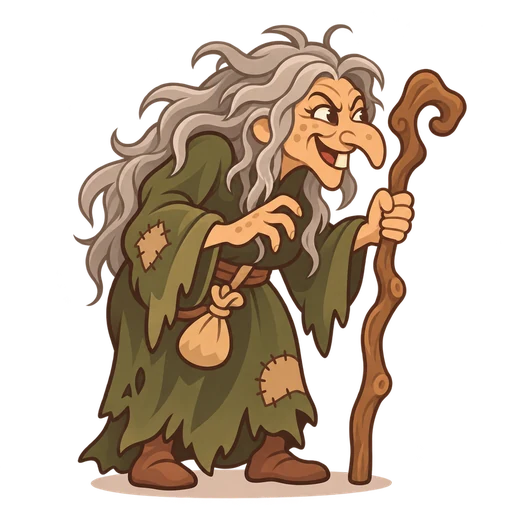
"You must be tired after your long journey. Come to my palace and rest." The horse Kerkula had told him that the witch would meet him in the shape of a girl, and that anyone who entered her palace never came out again.
"It's true, I am tired. I don't mind a rest. Lead the way," said Kendebai. As the girl walked on ahead, Kendebai swung his diamond sword. Fire flashed from the diamond sword, and the world was covered in fog once more. When the fog cleared, in place of the girl lay an old woman cut in two. Kendebai cut off the old woman's head and put it in his saddlebag. "No bird could fly and no beast could run through the land this old woman ruled. Nobody knows yet that she is dead. So the Samruk will not come here. Let's rest here for three or four days," said the horse Kerkula. Kendebai rested there for three or four days, gathered up the old woman's precious treasures, put the golden trough in front of him on Kerkula, and with the golden-tailed foals behind him arrived safe and sound at the khan's palace. The khan was overjoyed and held a great feast. In the middle of the feast, the khan's two sons turned up, having found nothing at all; they had wandered about until their necks were as thin as sticks and their legs as thin as reeds, worn out and in rags. The khan seated Kendebai in the place of honour and asked him who he was.
"I am not a khan's son, I am a son of the people. My name is Kendebai, and people call me Kendebai of the horse Kerkula. I haven't come to your land out of boredom, but on business. I am looking for two things I have lost... I am looking for my honour. If you allow me, I will tell you," said Kendebai.
"Tell me, tell me, my son!" said the khan.
"Some years ago your raiders attacked our people, drove off our livestock, and tied up and carried away a hero of ours whom they captured. I have come to free that hero and take him home. That is the first thing. The second thing I am looking for is this: one day, while I was herding cattle, a golden slipper belonging to one of six swans flying in the sky was left in my hand. They say this golden slipper comes from your land. I have come to return it," said Kendebai, and he handed the golden slipper to the khan. The khan said:
"Very well, my son! It is true that I had your people's livestock driven off and your hero tied up and brought here. The hero Mergenbai and his wife are both in our hands. I sent a messenger to Mergenbai in the dungeon, saying, 'If you serve me, I will free you,' but he turned out to be a stubborn hero. 'I will not serve my enemy. But if you untie my hands and feet, then we can talk,' he said, and he would not budge. We were afraid to untie him. My aim all along was to get hold of you. We had heard of your fame too. I wanted to bring you here and send you after the black bird that never leaves me a single foal. When I couldn't find you myself, I thought, 'If he has any honour, he will come looking,' and so I had your people raided and your hero tied up and brought here. Even after that you didn't come for about two years, so my six daughters went looking for you. This is my youngest daughter's slipper. Now I have one more condition for you. It is this: in the world there is a seven-headed giant, a roaring lion and a man-eating witch. Kill all three and bring me their heads. If you do this, I will free your hero and give him back to you, and return your livestock. I will give you my youngest daughter and make you my son-in-law," he said. Kendebai brought the saddlebag from Kerkula's saddle and poured out before the khan the lion's fang, the old woman's head and the seven-headed giant's eyes. The khan was satisfied and set free the hero Mergenbai from the dungeon, his wife and the other captives. He returned the livestock that had been taken. He married his youngest daughter to Kendebai, held thirty days of games and forty days of feasting, gave him many gifts and sent Kendebai home. Kendebai drove his people's livestock home and returned it to its owners. And the boy who herded the lambs was reunited with his parents and was overjoyed. His parents rejoiced to be with their son again. They held great celebrations and a big feast. As long as Kendebai lived, no enemy dared to attack his people. And so this people came to be known as the people of the hero Kendebai of the horse Kerkula.
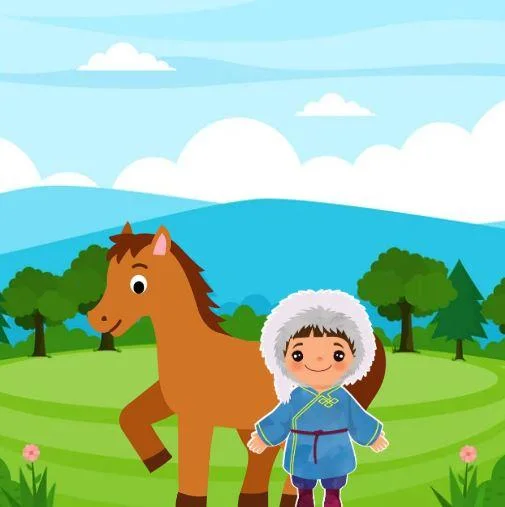
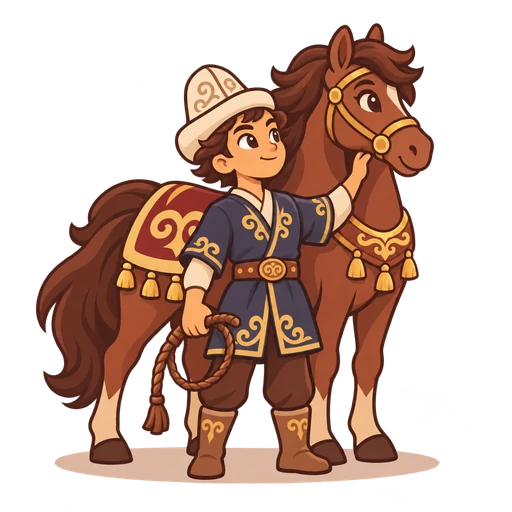
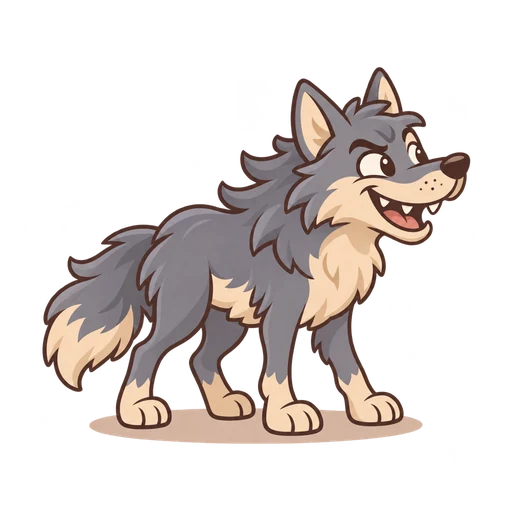
Heroes of this tale
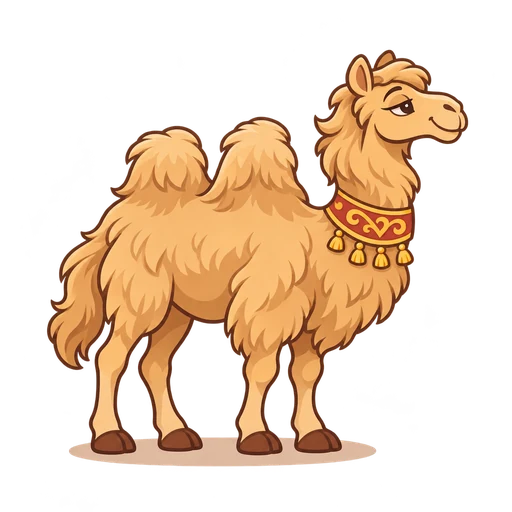
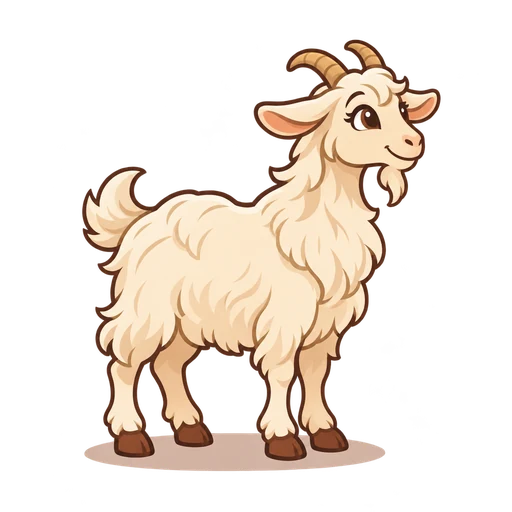
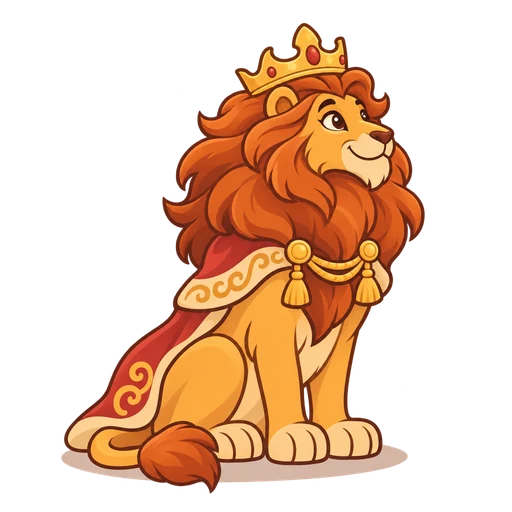
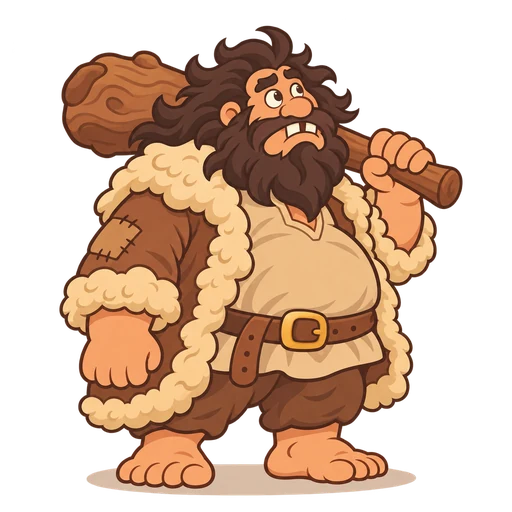
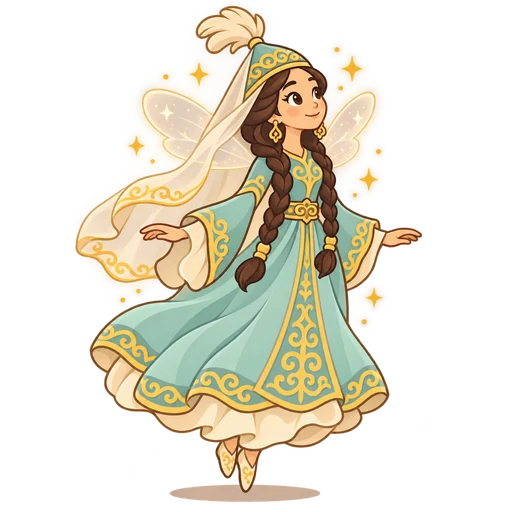
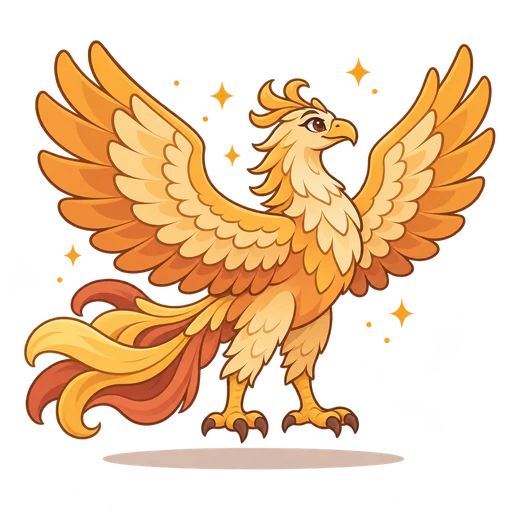
Well done! The story is over!
You reached the end of the story. Great job!






Every day at 8:30 pm we'll send one bedtime tale. Just one notification a day.
On iPhone: tap Share → Add to Home Screen, open the site from that icon and turn it on here.
Done! Look out for a tale this evening 🌙
Something went wrong. Please try again later.
5 stories with your name and your picture. Show your parents!
For parents: a tale about your child for 390 ₸ — a trial week of Premium →Кендебайдың күші неден келді?
Share your opinion!
Kazakh folk tales 9 273 people viewed

iPhone and Android app
All the tales, right on your phone
Read and listen at home or on the road. Free, with no ads.
- Audio tales keep playing with the screen off
- Pick up reading exactly where you stopped
- Find tales by age and by whether they have audio
- Night background and a comfortable text size

Sign in to keep reading
Today's free tales are over — 3 more are available tomorrow. Sign in with Google to continue — it is free and takes a second.
Sign in with GoogleHave an Android phone? In the app all tales are open without signing in.
Have an iPhone? In the app all tales are open without signing in.
Read in the app
Пікір қалдыру (0 пікір бар)
Әзірге пікір ешкім қалдырмаған!
Пікір қалдыру