

Once upon a time, there was a land called Kashak. The king of this land was named Ghaip. Ghaip was an extraordinary wrestler and a warrior skilled in cunning. In such a flourishing era, he thought to himself, "I must do something to leave a legacy behind," and he set his sights on warfare, waging battles against neighboring kings to conquer lands and territories, thus increasing his fame. He even raided the land of a king named Kalman. The last war of Ghaip during his reign was this war against Kalman. As Ghaip grew older and realized that his former strength was waning, he decided not to wage war against any king again. The defeated kings, fearing the wrath of Ghaip, did not dare to seek revenge by declaring war against him. After being defeated by Ghaip, Kalman gathered his remaining strength and dreamed of wreaking havoc on the innocent Ghaip, who had conquered his land. To fulfill this dream, Kalman made the following proclamation to his people:
— "Whoever has any cunning or skill, let that talented person come to my court and compete in a contest of skills. That skill must be suitable for defeating an enemy! The person whose skill surpasses all others and helps me defeat my enemy will receive enough gold for their lifetime and will become my chief minister and commander," he declared. Upon hearing this proclamation from the king, many came from various places, hoping to showcase their skills and earn a valuable reward. Among the visitors was an elderly woman, hunched over and nearing sixty. Unlike the others, she did not come to boast of her skills but instead inquired about the nature of the war Ghaip was planning, the strength of his army, the number of soldiers, and the tactics he would employ. She expressed her disapproval of Kalman's plans:
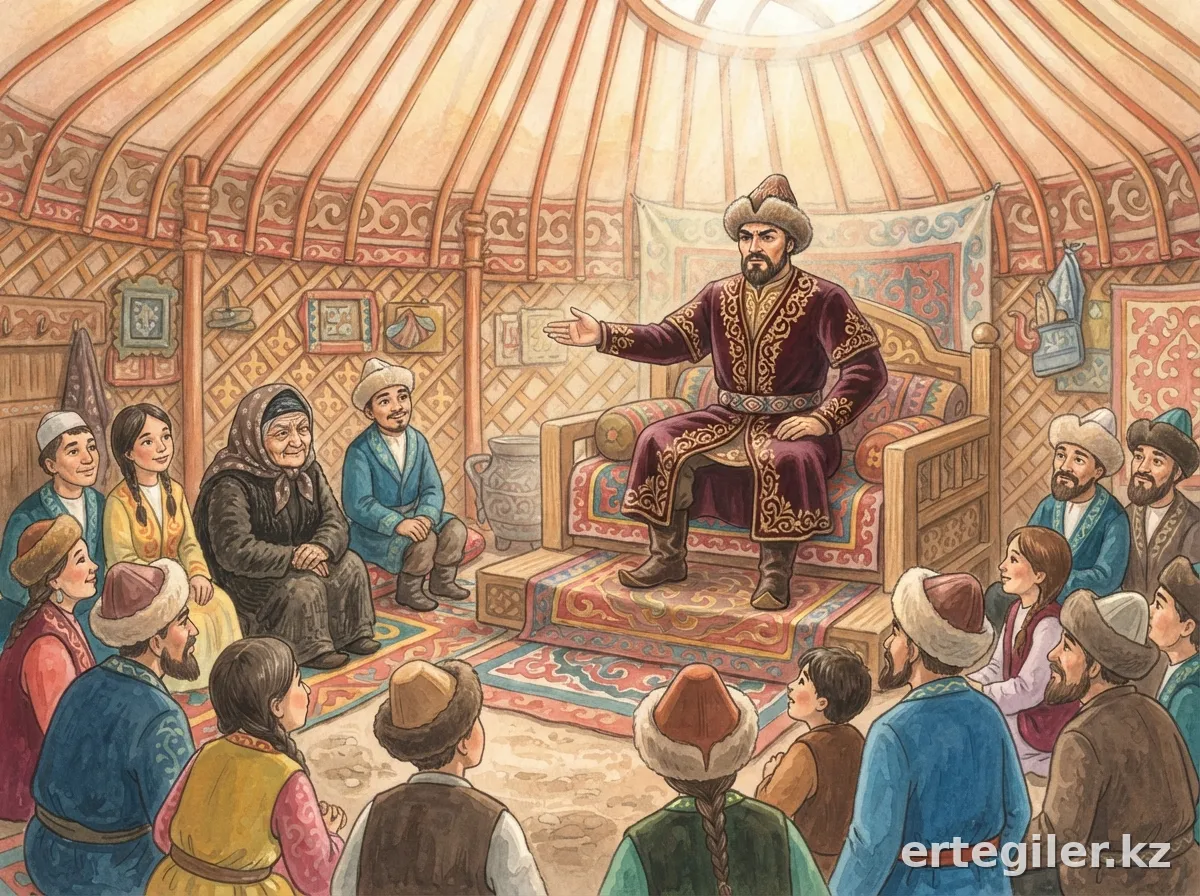
— "My lord, when I think about your plans, I see them as the actions of someone who walks willingly into the jaws of the enemy. In my opinion, one should first gather intelligence on Ghaip's tactics, his army's strength, and the support he has. Only after preparing accordingly should one consider going to battle. I speak from experience; do you think I have wasted my youth for nothing? I have spent my life in deceit and trickery. Therefore, I wonder if my presence will be of any benefit to your plans. If you wish, I can accompany you with my army. To win, we should focus on increasing our cunning rather than the number of soldiers. For Ghaip, whether he has many soldiers or few, it makes no difference. His strength and cunning are unmatched in this world. My hatred for Ghaip has burned within me since ancient times. Since no one has dared to oppose Ghaip, I have been waiting for the opportunity. Since I heard of your intentions, I have been overjoyed, thinking that God has granted my wish," she said, to which Kalman replied:
— "Mother, how did you come to hate Ghaip?"
— "At that time, you were just a child. Your father had a conflict with Ghaip, and I was left to suffer the consequences. My father was also a cunning and brave man. He was captured in that battle against Ghaip and died in a way that no one had ever seen before. I was young then, and since I was not the son of my father, he was buried without anyone to mourn him. Who could possibly hate him more than I?" the cunning old woman replied.
— "Very well, mother, if that is the case, then your hatred for Ghaip is stronger than mine. Why should I tell someone like you not to go to battle? You must have confidence in your skills," Kalman said. "If I can defeat Ghaip with your help, I will fulfill my promise and reward you as promised, whether it be to you or your family," he added, assuring her.
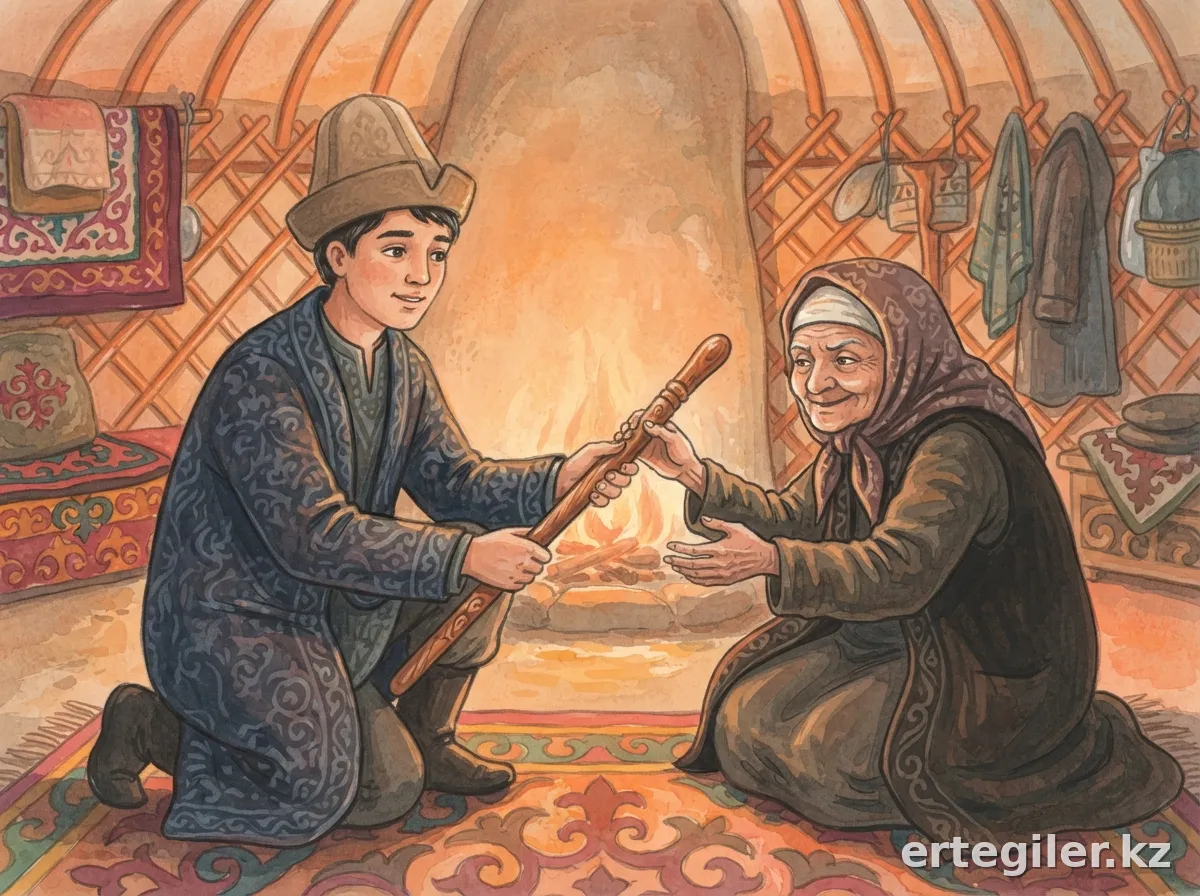
— "My lord, do not worry about my inability to defeat Ghaip. When I go to battle, I have a young man named Kalem who will be of great assistance to me. He is someone who will follow my orders without question. With his help, we will defeat Ghaip. I will not ask for anything else from you except for the reward you promised," the old woman advised Kalman.
— "I have been searching for such a person. If I cannot grant even one wish of a young man, how will I maintain my honor as a king?" Kalman expressed his gratitude to the cunning old woman. The old woman had a secret plan of her own: Kalem possessed a magical staff he had found by the sea. He did not know the staff's powers, but its beauty made him keep it hidden in his home. When he held the staff and wished to go somewhere, he could simply say the name of the place and be transported there instantly. If he touched someone with the staff, that person would be paralyzed. Kalem had hidden this staff in his home, thinking it was just a beautiful object.
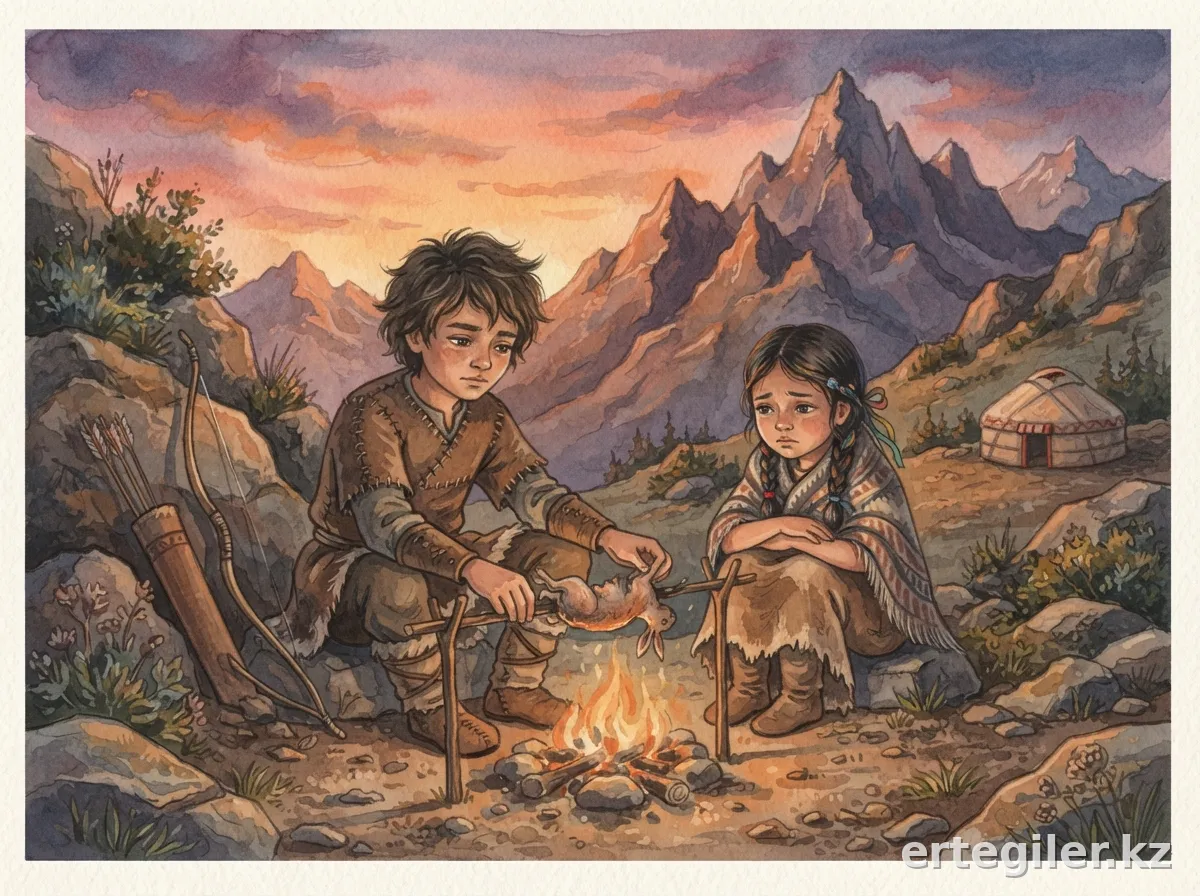
— "My son, do not give that staff to anyone. It will be useful to you when you are in trouble," his father had advised him when he first brought it home. However, the cunning old woman, knowing the staff's powers, tried to persuade Kalem to give it to her, but he refused. After the old woman left, she began to advise Kalem:
— "My son, I have come to offer you my wisdom out of concern for you. You may have some talent, but you should strive to learn more. I have some cunning tricks of my own that I can teach you. If you want to learn, I can help you. I have no descendants to pass my knowledge on to, and my time is short. I have lived long enough, and my time is drawing near. I do not have much time left on this earth. I want to share my knowledge before I die. To do this, I need someone who is willing to learn and will not give up. I believe you have the potential to learn and to teach others what you know. That is why I have come to you. I want you to participate in the king's contest and seek fortune and success," she said.
— "Oh mother, what are you saying? Do you think I have the strength to compete? I have no skills or talents. I am just a young man, and I have no desire to participate in such contests," Kalem replied.
— "Forty is the age when a man becomes a man," the old woman said, adding a touch of wisdom. Kalem responded:
— "Oh mother, it has been five years since my wife died. I have no wealth to offer, and I cannot afford to take another wife. I have tried to find a wife, but I have had no luck. You are the one who brought me into the world, and you are the one who has guided me," Kalem said, looking at the old woman.
— "Very well, my son, if you are not interested in finding a wife, then let me teach you two tricks. First, I will give you this medicine, which is a remedy for headaches. You can offer it to the king, and when he takes it, the palace will be filled with snakes. The king will be terrified and will panic. After that, you can throw this other medicine, and the snakes will disappear. When the king regains his composure, he will ask you, 'What brings you here, my poor friend?' You will respond, 'My lord, I wanted to show you one of my skills for the contest,' and then you can leave without waiting for a response," the old woman instructed Kalem.
Kalem followed the old woman's advice and went to the king's court, where he performed the tricks as instructed. The king was amazed and could not help but be impressed. The old woman, seeing Kalem's success, encouraged him further. Kalem was appointed as the king's chief minister and commander, and he was rewarded with wealth and honor. However, he did not forget the old woman who had guided him. He continued to seek her wisdom and learned many valuable lessons in the process.
Meanwhile, Kalman, the king of Kashak, was preparing for war against Ghaip. He was determined to take revenge and sought the help of Kalem, who had become a skilled warrior. Together, they devised a plan to confront Ghaip and reclaim their lands. The old woman watched as the events unfolded, knowing that her cunning and wisdom had played a significant role in shaping the fate of these young men.
As the story continues, the battles raged on, and the characters faced numerous challenges. Kalem's skills were put to the test, and he proved himself to be a formidable warrior. Ghaip, on the other hand, was not easily defeated, and the conflict escalated into a grand showdown between the two sides.
In the end, the tale of Ghaip, Kalman, Kalem, and the old woman intertwined, revealing the complexities of loyalty, revenge, and the quest for power. The story serves as a reminder of the consequences of one's actions and the importance of wisdom in navigating the challenges of life.





Пікір қалдыру (0 пікір бар)
Әзірге пікір ешкім қалдырмаған!
Пікір қалдыру