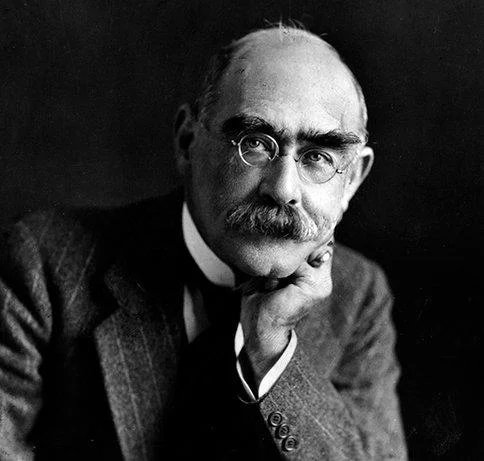
Rudyard Kipling
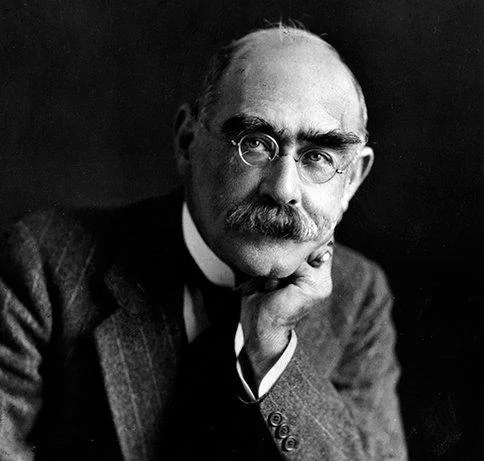
Joseph Rudyard Kipling (30 December 1865, Bombay – 18 January 1936, London) was an English writer, poet, and novelist.
His best-known works include The Jungle Book, Kim, and the poem "Recessional." In 1907, Kipling became the first Englishman to receive the Nobel Prize in Literature. That same year, he was awarded prizes from the universities of Paris, Strasbourg, Athens, and Toronto. Additionally, he received honorary degrees from the prestigious universities of Oxford, Cambridge, Edinburgh, and Durham. (30.12.1865, India, Bombay – 18.1.1936, United Kingdom, London) – an English writer. In his works, he vividly portrayed the moral integrity, feelings, and hard work of ordinary people and common soldiers.
The poetry collections "Barrack Room Ballads" (1892), "The Seven Seas" (1896), and "The Five Nations" (1903), as well as the storybooks "The Jungle Stories" and "The Phantom 'Rickshaw'" (both published in 1888), and the novels "The Light That Failed" (1890) and "Kim" (1901) are widely recognized. His tales about Mowgli, a child raised among wild animals, in "The Jungle Book" (1894) and "The Second Jungle Book" (1895) have become beloved stories for children. Nobel Prize laureate (1907).
Kipling's works have been published in Kazakh under the titles "Fairy Tales" (1968) and "Mowgli" (1983; translated by R. Rakhymbekov). Composer A. Serkebaev wrote a rock opera ballet titled "Mowgli – My Brother" (1980, with a libretto by D. Nakypov). Kipling's richly comparative language made a significant contribution to the vocabulary of the English language.